Academic Document Translation: A Complete Guide for International University Applications
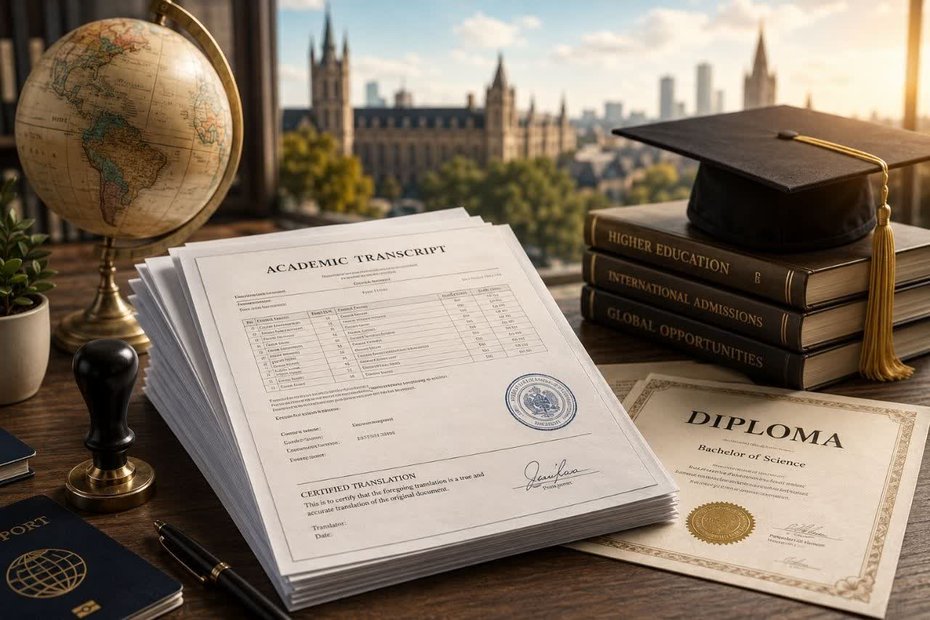
Translating academic documents is one of the most important steps in the international admissions process. Universities, credential evaluation agencies, scholarship providers, and immigration authorities rely on academic records to assess an applicant’s educational background and qualifications. Because these documents play a critical role in admission decisions, academic document translation must be accurate, professionally formatted, and compliant with the requirements of the receiving institution.
Whether you need transcript translation, diploma translation, degree certificate translation, or certified translation of academic records, understanding the process can help you avoid delays and ensure your documents are accepted without complications.
Why Academic Document Translation Matters
Foreign universities and institutions use translated academic documents to evaluate an applicant’s academic achievements, grading system, course history, and educational credentials. Even minor translation errors can create confusion, lead to requests for clarification, or delay the admissions process.
Professional academic document translation ensures that transcripts, diplomas, certificates, recommendation letters, and other educational records accurately reflect the content of the original documents while maintaining their official appearance and credibility.
Understanding University Translation Requirements
Before starting the translation process, applicants should carefully review the requirements of the university, embassy, or credential evaluation agency receiving the documents. Different institutions may have different standards regarding certification and document submission.
Many universities require certified translations, while some may request notarized translations or translations completed by sworn translators. In certain cases, institutions may require a translator’s certification statement confirming that the translation is complete and accurate. Some organizations may also require translated documents to be submitted directly by the translator or translation agency.
Checking these requirements in advance can prevent unnecessary delays and reduce the risk of document rejection.
Choosing a Qualified Academic Translator
Selecting an experienced translator is essential when translating educational documents. Academic translation requires more than language proficiency; it demands familiarity with educational terminology, grading systems, institutional structures, and official document formatting.
A professional translator should have experience translating:
- Academic transcripts
- Diplomas and degree certificates
- Educational records
- Recommendation letters
- Academic references
- Research abstracts and academic publications
Experienced translators understand how to accurately render course titles, academic honors, qualifications, and institutional terminology while preserving the meaning and integrity of the original document.
Preparing Academic Documents for Translation
Proper document preparation helps ensure accurate and efficient translation. Applicants should provide clear and complete copies of all academic documents, preferably in high-quality digital format.
Documents should include all pages, official seals, signatures, stamps, and any additional information appearing on the original records. Cropped or incomplete documents can result in omissions or delays during the translation process.
Providing supporting information, such as grading scales, course descriptions, or curriculum details, can also help translators produce more accurate translations and assist universities in interpreting academic results correctly.
Maintaining Original Formatting and Structure
Professional academic document translation should closely mirror the structure and layout of the original document. Universities often compare the translated version against the original records, making consistent formatting extremely important.
This includes preserving:
- Tables and grading charts
- Headers and footers
- Institutional logos
- Official seals and stamps
- Document numbering
- Signature sections
Maintaining the original format improves readability and helps admissions officers verify information efficiently.
Common Challenges in Academic Translation
Academic terminology often presents unique challenges because educational systems vary significantly between countries. Course names, qualifications, academic honors, and assessment methods may not have direct equivalents in another language.
Professional translators must carefully select terminology that accurately reflects the original meaning while remaining understandable to international institutions. Consistency throughout the document is equally important, particularly when translating course titles, departments, and degree classifications.
It is also important not to convert grades between educational systems unless specifically requested. Grade conversion is typically handled by credential evaluation agencies rather than translators.
Certification, Notarization, and Apostille Requirements
Depending on the destination country and institution, applicants may need additional verification beyond translation.
Certified translations are commonly required for university admissions and official applications. Some organizations may request notarized translations, while certain international procedures require an apostille or legalization of the original document before translation.
Understanding these requirements early in the application process can save valuable time and prevent last-minute complications.
Why Machine Translation Is Not Suitable for Academic Documents
Although machine translation tools have improved significantly, they remain unsuitable for official academic submissions. Educational terminology, institutional language, and document formatting often require human judgment and expertise.
Machine-generated translations can introduce inaccuracies, misinterpret course titles, or fail to preserve the professional presentation expected by universities and government authorities.
For this reason, applicants should always use professional human translators when translating academic documents for official purposes.
Final Review Before Submission
Before submitting translated documents, applicants should carefully review all details to ensure accuracy and consistency.
Particular attention should be given to:
- Names and surnames
- Dates
- Course titles
- Degree names
- Institutional information
- Reference numbers
Allowing sufficient time for translation, certification, notarization, and document delivery is equally important. Starting the process well before application deadlines reduces stress and helps ensure a smooth submission.
Professional Academic Translation Services
High-quality academic document translation can significantly improve the presentation of your educational credentials and support a successful international application. Whether you require transcript translation, diploma translation, degree certificate translation, or certified translation of academic records, working with experienced professionals ensures accuracy, compliance, and peace of mind.
Professional translators understand the expectations of universities, credential evaluation agencies, and immigration authorities, helping applicants present their academic achievements clearly and confidently.
Frequently Asked Questions
Do universities require certified translations?
Many universities require certified translations of transcripts, diplomas, degree certificates, and other academic documents. Applicants should always verify the specific requirements of the institution receiving the documents.
Can I translate my own academic documents?
Most universities and official institutions do not accept self-translated academic documents. Professional or certified translation is usually required.
How long does academic document translation take?
The timeframe depends on the number of documents, certification requirements, and the complexity of the content. Applicants should begin the process well before application deadlines.
Which academic documents commonly require translation?
The most frequently translated educational documents include transcripts, diplomas, degree certificates, recommendation letters, academic records, and research-related documents.
Is machine translation acceptable for university applications?
No. Universities and official organizations generally expect professionally translated documents. Machine translation may contain errors that affect the accuracy and credibility of academic records.
Write comments